
Why your browser wallet should feel like a trusted pocket — not a leaky one
Whoa!
I was fiddling with a few testnets the other night when something felt off about the approval prompts.
Really, the dialog pop-ups looked almost right, but my instinct said pause.
Initially I thought simplicity was the enemy, but then realized that crowding options into one prompt actually makes users click fast and wrong, which is a bigger problem.
So yeah, this is about how browser extension wallets can be both liberating and dangerous, depending on small UI choices and the guardrails they provide.
Hmm...
Short story: browser wallets are the bridge between your browser and blockchains, and that bridge is only as strong as the edges.
On one hand they let you interact with DeFi without running a full node; on the other, they open attack surfaces that you don't see until somethin' goes sideways.
My first instinct when I started using extensions was convenience over control, though actually, wait—let me rephrase that: convenience tends to override caution unless the wallet makes safe choices obvious.
Here's what bugs me about many wallets—too many clicks, vague language, and approvals that assume you know what "contract interaction" really means.
Seriously?
Yes—because users routinely sign unlimited token approvals and never revoke them.
That's not just sloppy; it's a persistent systemic risk that allows drained wallets and bad ops to cascade, fast.
For years I watched friends lose funds to consent fatigue, where the UI nudges toward acceptance instead of awareness, and that pattern repeats across chains and dapps.
That repetition is alarming, and it reveals a design problem as much as a security problem.
Okay, so check this out—
There are practical, user-centered things that can make a multi-chain browser wallet feel safer without being a pain.
First: clear approval scopes.
Second: per-site and per-contract visibility that is readable, not lawyer-speak, so you can see "what can be moved" and "how often" in plain English.
Third: defaults that favor protection—limits instead of infinite approvals, transaction previews that map to the actual on-chain call being made, and one-click revoke options accessible from the same screen.
Whoa!
Let me be candid—I'm biased toward wallets that blend power with guardrails.
I like tooling that assumes users are smart but busy, so it reduces risk by default.
On a technical level that means strong permission models, deterministic transaction parsing, and multi-chain awareness so the wallet knows when something odd crosses domains or tokens with different decimal rules.
And yes, that requires careful engineering work and a UX that respects cognitive load.
Hmm...
When a wallet supports many chains, it must track approvals, nonces, and network quirks per chain, not as an afterthought but as core data.
Initially I thought single-wallet-for-every-chain was just convenience, but then realized the real benefit is a single mental model: one place to check exposures across all networks, which reduces the chance you miss a dangling approval on a forgotten chain.
On the flip side, consolidating control raises the stakes if that wallet itself is compromised, so the solution is layered defenses—hardware-signing support, strong passphrase handling, and session isolation.
That balance is subtle, and it's where extension wallets can either shine or fail spectacularly.
Really?
Yes, because browser extensions run in a complex environment where a malicious site or another compromised extension can attempt to phish or inject UI elements.
Defense-in-depth matters: sandboxing, clear origin attribution, and transaction signing flows that are hard to spoof.
One useful pattern I've seen is robust origin binding, where the wallet shows explicit domain fingerprints and warns when a transaction originates from an iframe or a cross-origin redirect—little cues that make me slow down and check.
Those cues are small, but they change behavior.
Wow!
I tried a few browsers and extension combos and kept returning to tools that presented approvals in a readable ledger-like format.
That format lists token, allowance, spender, and last-used date in one glance, and it includes a revoke button right there—no deep menu diving.
Also, I liked wallets that parse complex DeFi interactions into human steps, so a leveraged swap isn't just "sign this" but "step 1: approve token A; step 2: initiate swap; step 3: set slippage" which helps you spot unneeded approvals and sketch out risk.
These features made me trust the process more, almost like having a friend looking over my shoulder who actually knows gas math.
Okay, one more honest tangent (oh, and by the way...)
People ask me, "Which browser wallet should I use?" and I default to recommending ones that emphasize safety without sacrificing multi-chain capabilities.
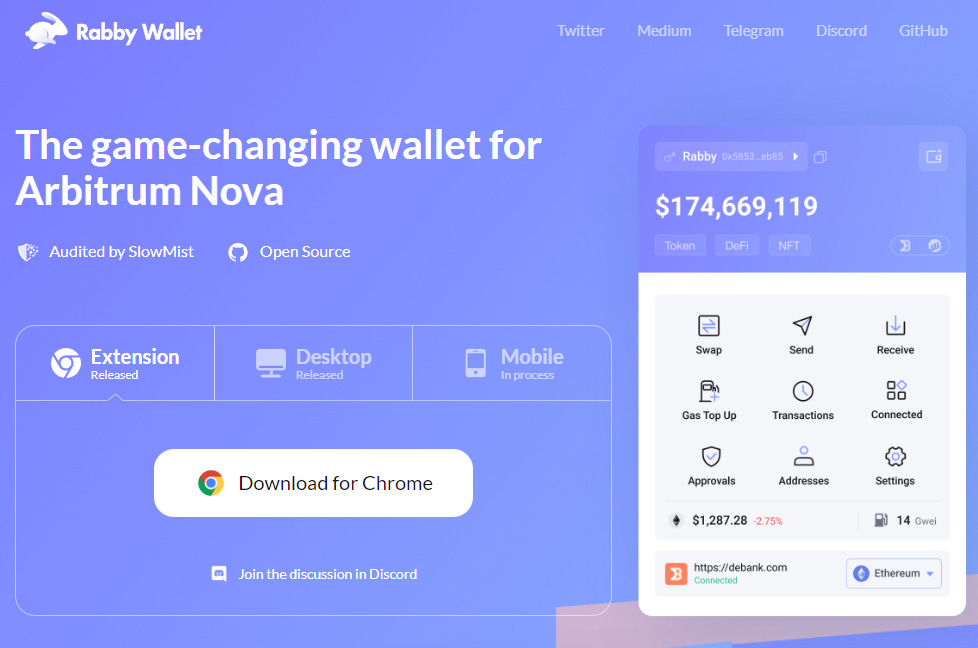
If you're curious, check a wallet like rabby wallet because it focuses on permission granularity, clear UI for approvals, and multi-chain convenience wrapped in sensible defaults.
I'll be honest—no tool is perfect, but tools that nudge toward safety make human error less catastrophic.
That nudge matters more than you might think until you need it.
Wow.
Practical checklist for safer extension-wallet use:
- Use per-site approvals and avoid infinite allowances unless absolutely necessary.
- Keep a small hardware wallet for high-value holdings; use software wallets for day-to-day interactions.
- Regularly audit connected sites, and revoke old approvals monthly—or automate it if the wallet offers that feature.
Hmm...
Also consider session isolation: use separate browser profiles for high-risk browsing, and avoid installing unknown extensions alongside your wallet.
On a systems level, update the wallet and browser often; attack vectors evolve, and so do mitigations.
Something that felt safe last year might not be safe now, so a watchful posture matters.
I'm not 100% sure about every recommended cadence, but monthly checks have worked well in practice for folks I coached.
Really?
Yes—because security is both technical and behavioral.
Tools can lower friction for safety, but user patterns are powerful; make safe defaults and educate in-app with microcopy and brief warnings, not long manuals.
When wallets invest in clear, contextual messaging and reversible actions, users internalize safer habits without feeling burdened.
That design choice scales better than lecturing people after a loss.
Whoa!
To wrap (but not wrap like a predictable summary), think of your browser wallet like footwear for a city with lots of different terrain.
You want something comfortable for daily walking, but with good tread, ankle support, and easy repair options when a sole wears out.
That means a wallet that supports multi-chain travel, shows you where the potholes are, and helps you patch mistakes quickly.
It doesn't have to be perfect—just thoughtful, and honest about trade-offs.
How to get started safely
Quick practical steps: pick a wallet that makes approvals readable, enable hardware signing for big transactions, separate daily funds from savings, and audit connected sites often.
Try small transactions first on unfamiliar apps so you build trust without risking much.
And remember, a good wallet will help you, not scare you—so choose one that explains actions clearly and gives you recovery options that are sensible, not secretive.
Somethin' as simple as an explicit "this will spend up to X tokens for Y reason" prompt can prevent a lot of grief.
Take those small steps and you'll thank yourself later—trust me on that one.
FAQ
What makes a browser extension wallet safer than others?
Clarity in approvals, defaults that limit exposure, multi-chain visibility, and features like easy revoke and hardware-wallet integration make a big difference; usability choices are security choices.
How often should I audit approvals?
Monthly checks are a reasonable baseline for most users, with immediate audits after using unfamiliar dapps and before large transactions; automation helps if your wallet supports it.
Can one extension manage many chains safely?
Yes, if it treats each chain's state separately, surfaces approvals clearly across chains, and offers layered protections like hardware signing and session isolation to reduce single points of failure.